KI PhD Job and Salary satisfaction survey

Results

We are in touch with the trade union to find a suitable time to share these results with them. We will share them with various KI leadership figures over the coming weeks. 

Commentary on Work Environment and Job satisfaction

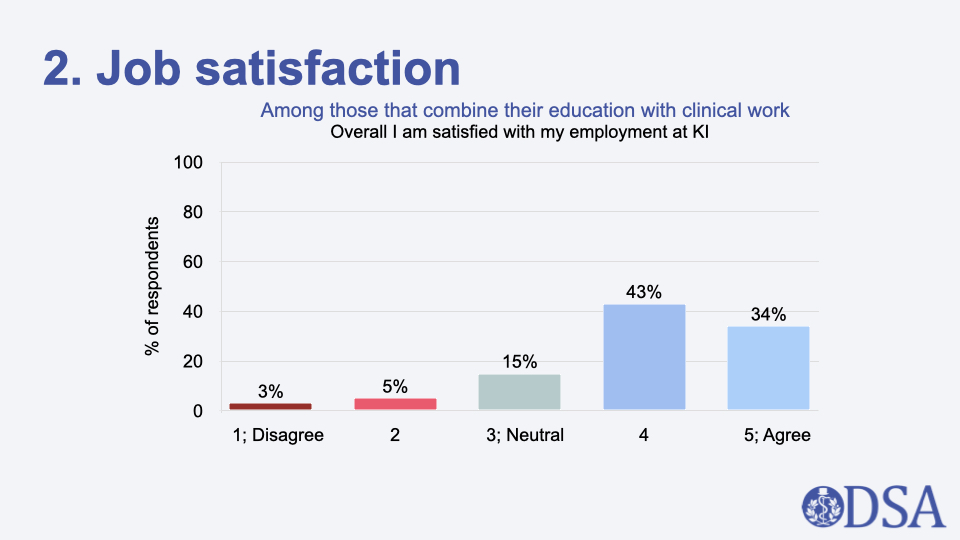
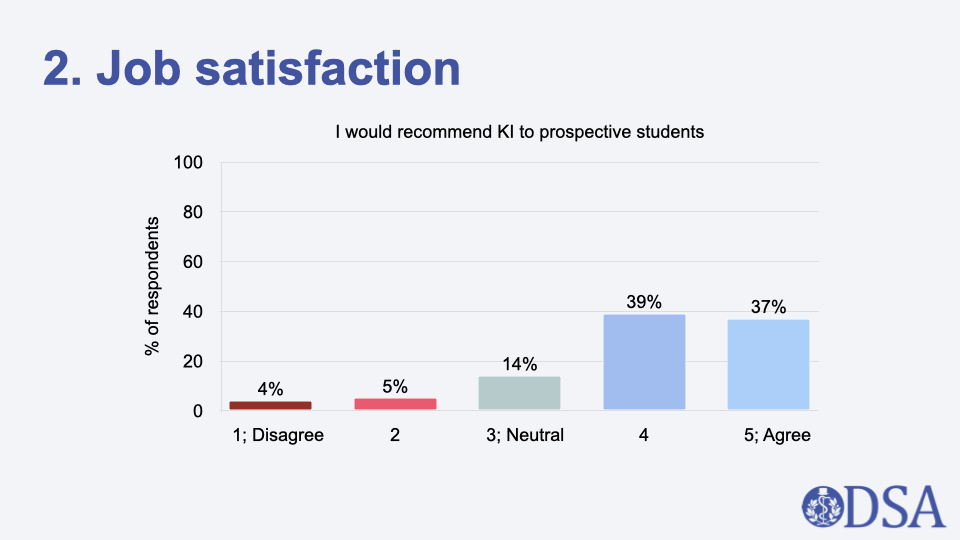
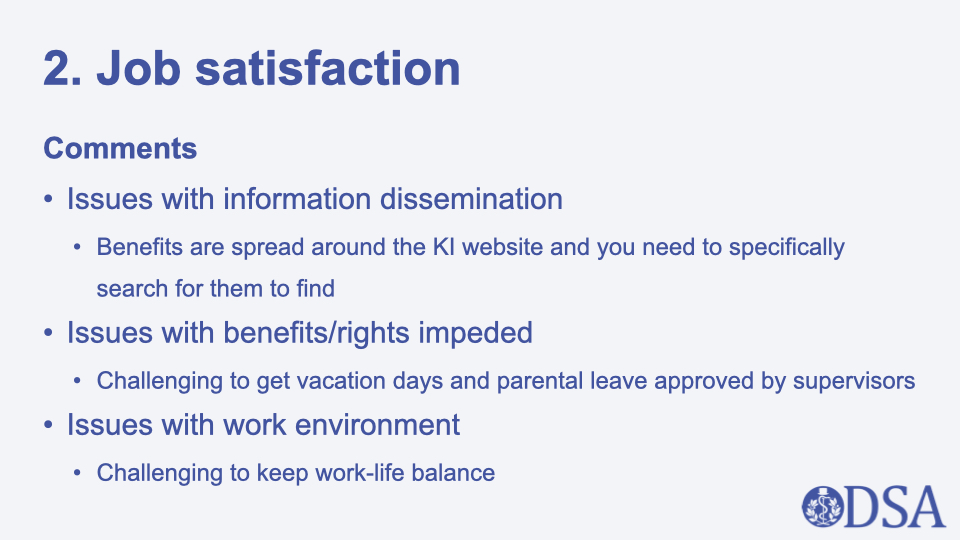
Job satisfaction was reported to be high by the majority of doctoral students. However, several work environment issued were brought up. Supervisors not approving vacation days or parental leave was the most prominent among the respondents and also the most concerning. The power dynamic between a supervisor and the doctoral student is unique, as the supervisor functions both as the most immediate manager and as the scientific leader.  It is NOT acceptable for the supervisor (or any colleague for that matter) to abuse their power in any way. There is a system in place to report such behaviours. We highly recommend to read our step-by-step guide on how to use the system, for the benefit of yourself but also of future doctoral students in the same group/department.

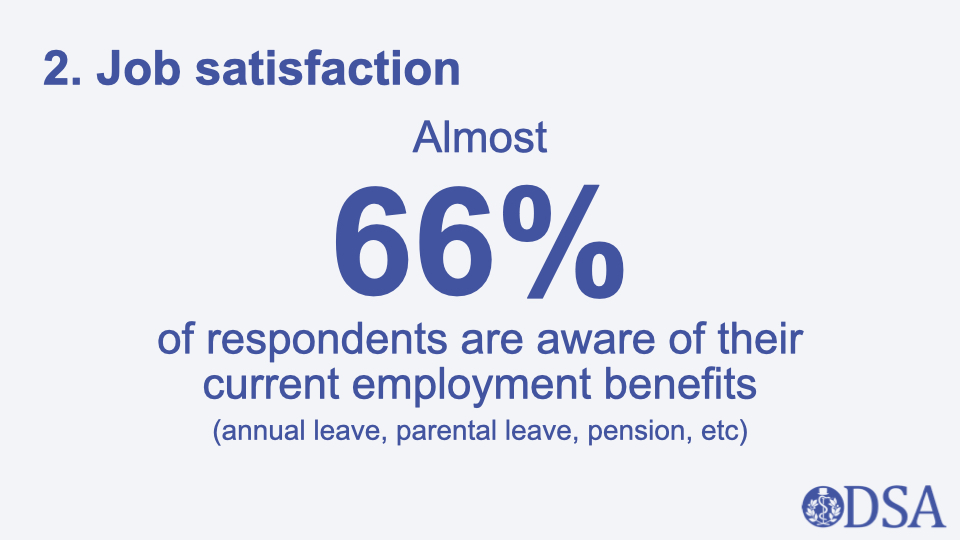
Another point made by several doctoral students is that the first contract we sign is not accompanied by a list of all the benefits we are entitled to. Information on parental leave, pension, insurance etc. is available online on the KI website. However, the lack of a comprehensive booklet is noticeable and the reason we created the PhD Information Booklet. We are planning on publishing a new version at the end of this semester with more information on the employment benefits.

Commentary on Salary satisfaction

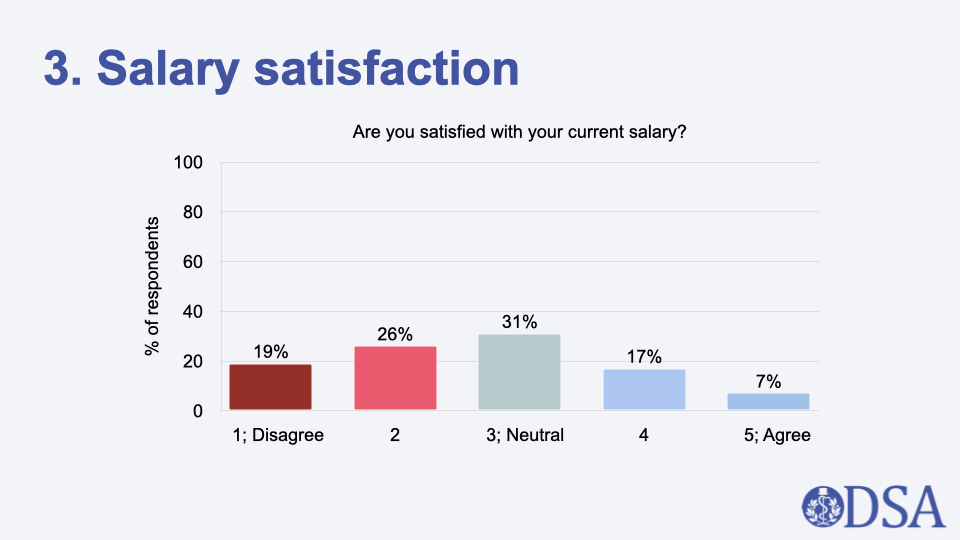
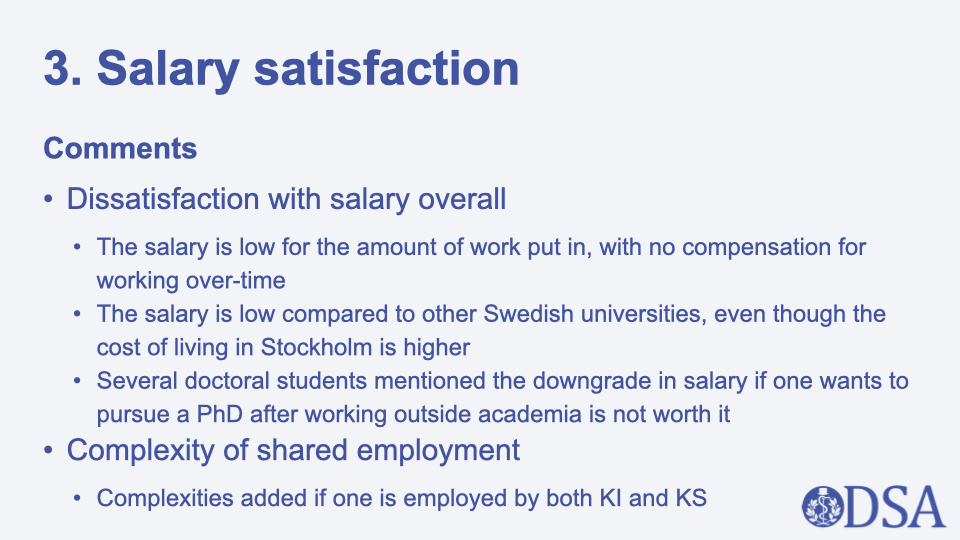
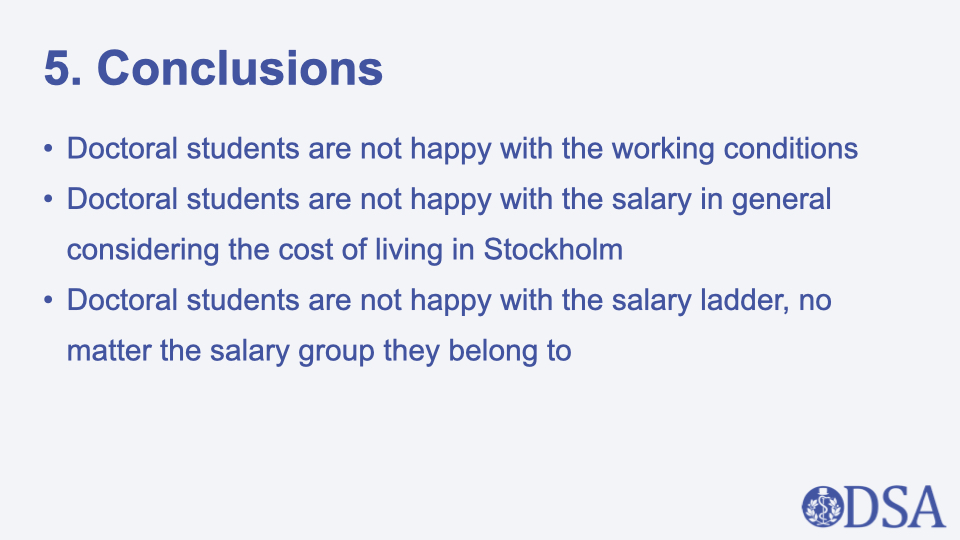
In contrast to the high job satisfaction reported by the majority of doctoral students, salary satisfaction was quite low. Despite the high cost of living in Stockholm and the prestige of KI, the compensation offered fails to cover the needs of many doctoral students. “It is not worth it” was recited by many who think that the amount of time and effort put into their work is not reflected in their payslip. Being pressured by their supervisors or having to deal with “difficult professors” left a few questioning.

Who decides upon our salary?

Our salaries are being negotiated in the autumn of each year by SACO-S and KI. SACO-S is an umbrella organisation incorporating several trade unions. The SACO-S representatives are the ones representing our interests and negotiate on our behalf. You can read more about them here (only available in Swedish).

Doctoral students or even doctoral student representatives are not allowed to take part in the process. That makes initiatives such as this one quite important as it allows us to influence the negotiations.

Comparison with other universities

Important to keep in mind: Unlike many other universities, KI has adopted a time-based salary increase model, meaning that the completion of Year 1, Year 2, etc is associated with an increase in salary. The alternative is performance-based, meaning that the doctoral student would need to prove they have completed work corresponding to one full year, two full years, etc of study to receive an increase in their salary. This system is easily and commonly abused and leave many doctoral students with the same starting salary even after 4 years of full-time employment. The PhD Chapter at KTH (equivalent to DSA) has established a working group that aims on changing that.

Conditions
Salary (from 2024-10-01)
Starting salary
30 300 kr
When 50% of the requirements for the doctoral degree has been achieved
32 500 kr
When 80% of the requirements for the doctoral degree has been achieved
34 000 kr
Conditions
Salary (from 2024-10-01)
Starting salary
33 000 kr
When 30% of the requirements for the doctoral degree has been achieved
33 600 kr
When 50% of the requirements for the doctoral degree has been achieved
36 000 kr
When 80% of the requirements for the doctoral degree has been achieved
37 100 kr
Conditions
Ladder for Doctoral Student*
Ladder for Doctoral Student with medical degree*
Ladder for Doctoral Student with medical license to practice*
Starting salary
31 900 kr
36 300 kr
38 300 kr
Year 2
32 400 kr
36 800 kr
38 800 kr
Year 3
33 200 kr
37 600 kr
39 600 kr
50%
33 700 kr
38 100 kr
40 100 kr
80%
36 400 kr
40 800 kr
42 800 kr

*salary level for 2023-2025

Conditions
Salary (from 2024-10-01)
Starting salary
31 100 kr
When 30% of the requirements for the doctoral degree has been achieved
31 700 kr
When 60% of the requirements for the doctoral degree has been achieved (or when reached the level of a Licentiate degree)
33 000 kr

An initiative by Stockholm University

Stockholm University has had historically the lowest PhD salaries in Stockholm. To change that, the Central PhD student council (equivalent to DSA) wrote a letter to their SACO-S representatives outlining their dissatisfaction with the status quo and reasoning for a meaningful change. Through that initiative they managed to achieve a higher salary increase than they would have otherwise. You can find the letter they sent below.

Commentary on the PhD Salary ladder

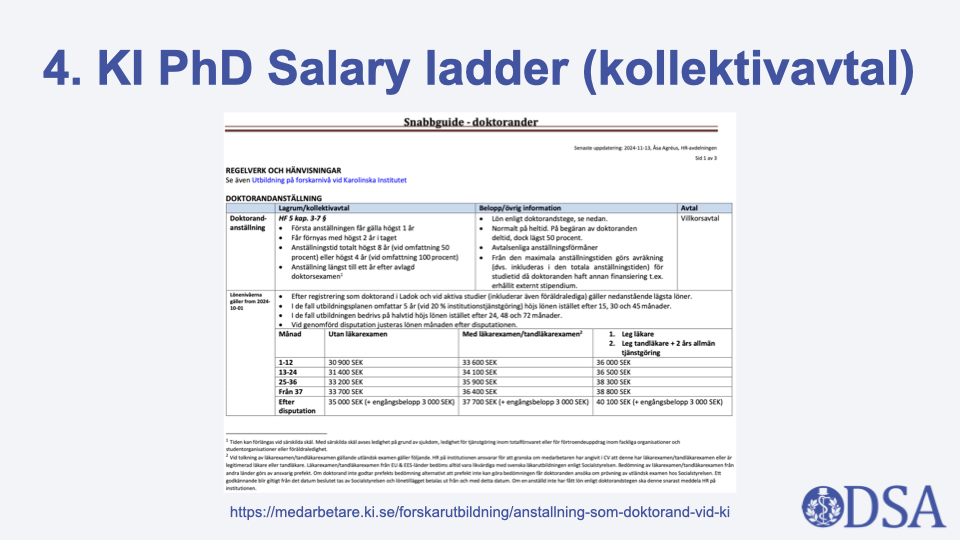
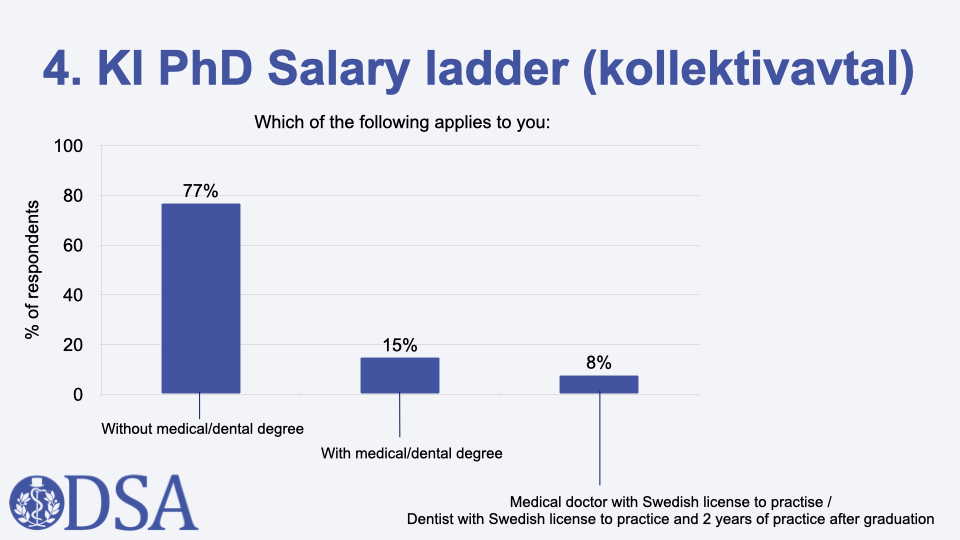
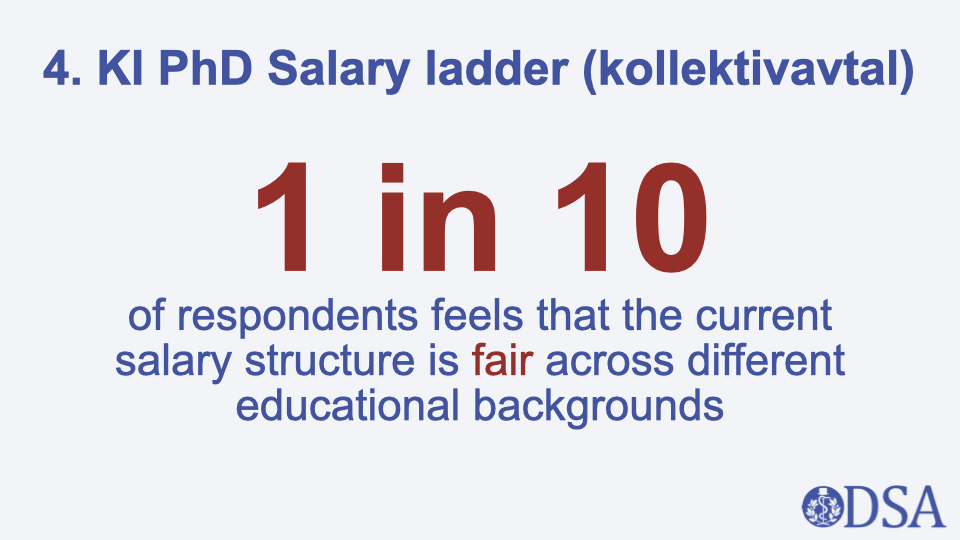
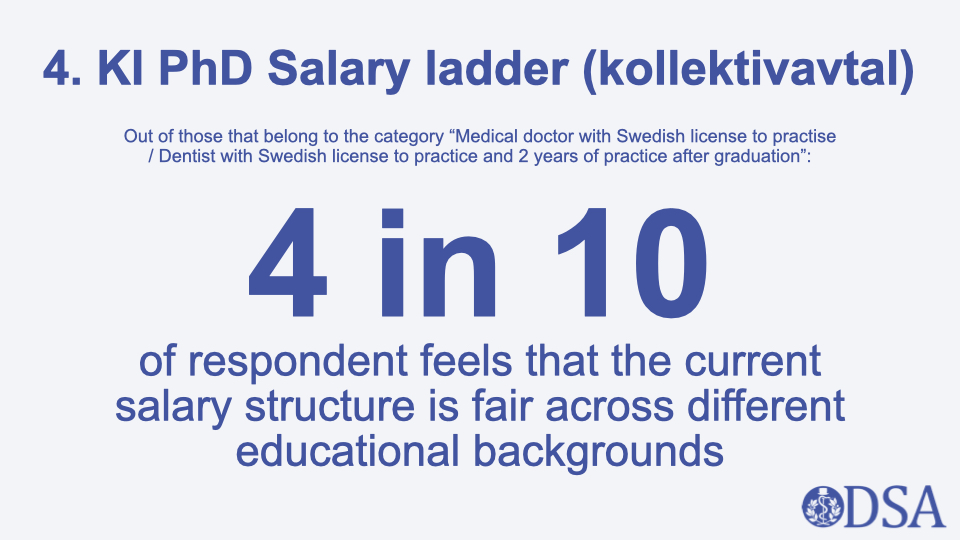
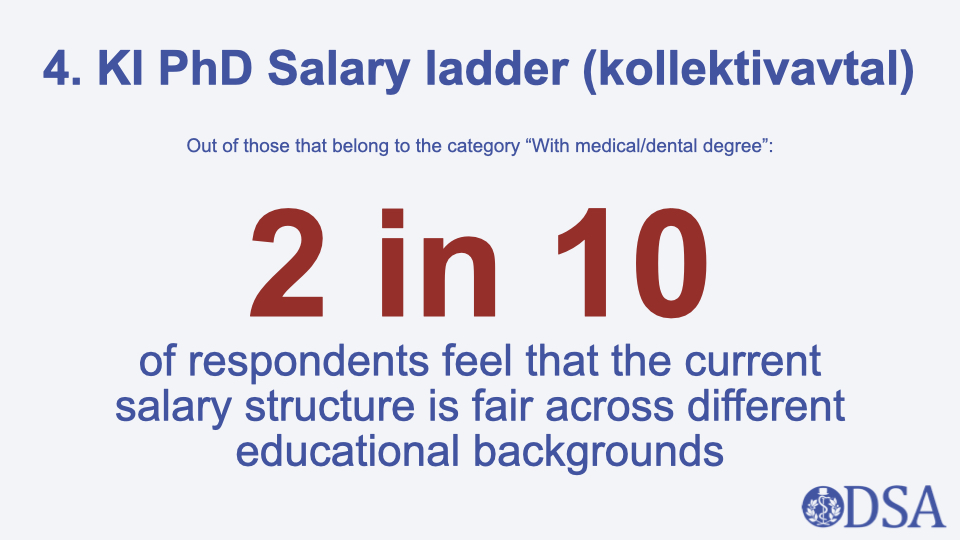
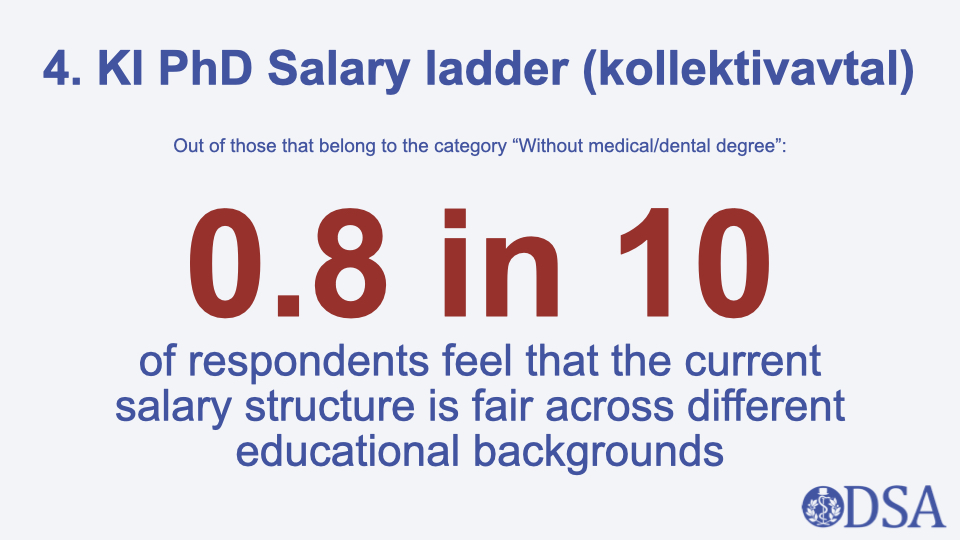
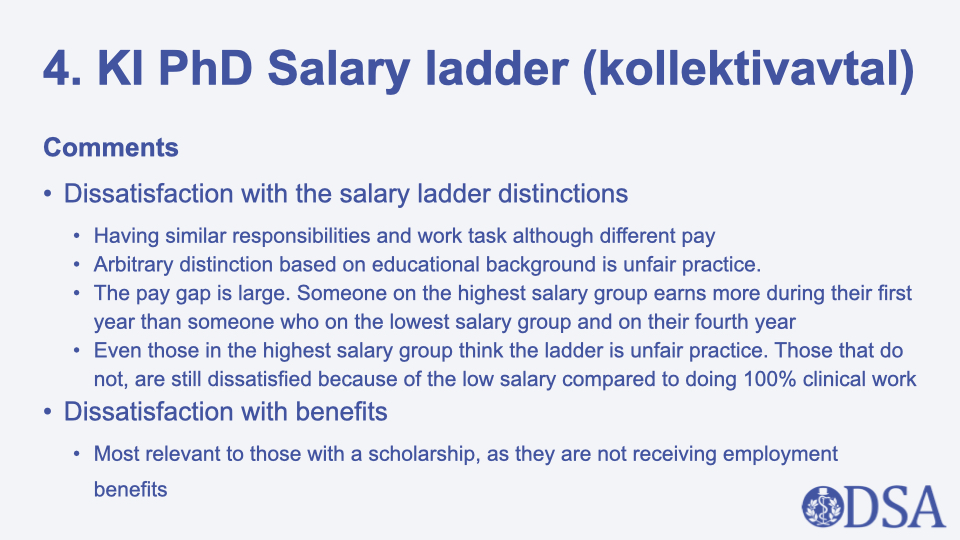
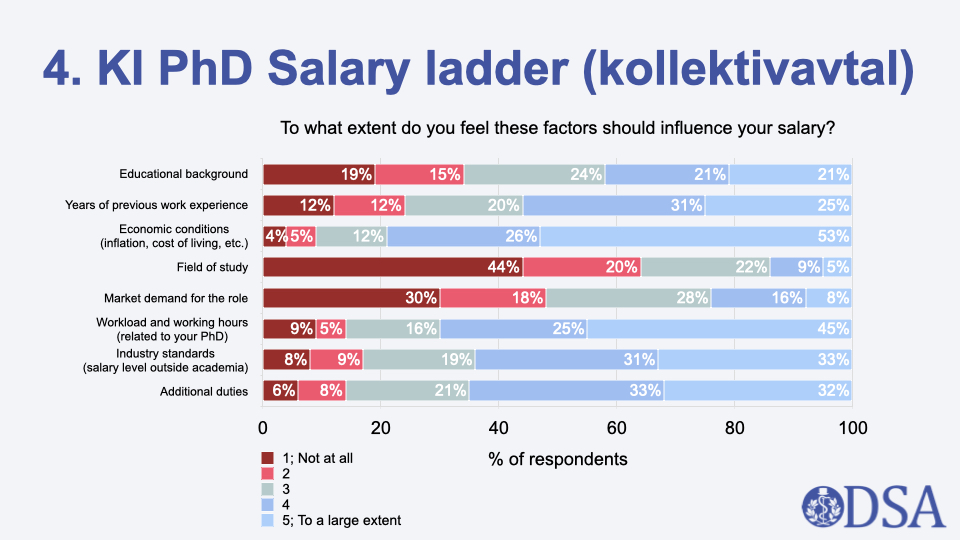
The PhD Salary ladder (doktorandsteget) was established approximately 15 years ago to encourage more medical doctors to pursue a PhD. The rationale is that working clinically is far more lucrative than doing a PhD, and therefore the ladder is supposed to shrink that gap. The results of our survey show that the KI PhD community thinks that this is unfair practice. “Equal work for equal pay” seems to be the consensus of the majority of respondents. In fact, SACO-S told us this is not the first the first time this has been brought up, but nothing was done in the past to change it.

At the same time, even those that belong to the highest salary group are dissatisfied with the ladder. The salary is still noticeably low compared to working at the clinic full time.

Did you notice?

The PhD Salary ladder is the result of the negotiations between KI and SACO-S, which end with an agreement that is signed by both parties. In the actual agreement (collective agreement – kollektivavtal), the medical and dental backgrounds are given as examples that could qualify someone for a different salary group. Any education background/profession in “marknadsutsatta verksamhersområden” (word by word: market vulnerable field of activity) can be considered as valid justification for jumping to a different salary group. Essentially, one can achieve higher salary within certain fields due to high competition between employers. This information is not included in the quick guide to doctoral students’ salary that KI publishes on their website.
Collective agreement

KI Quick guide

What can you do to help?

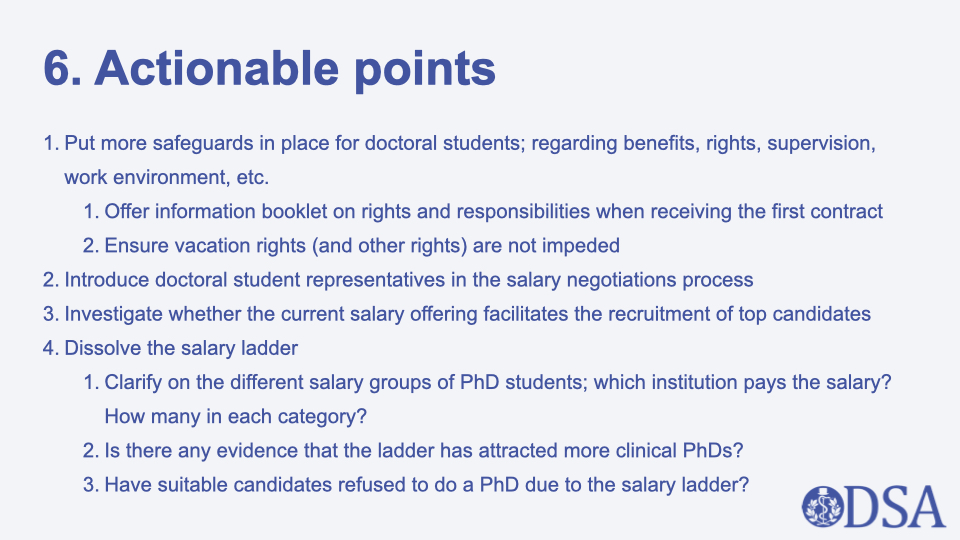
We will post regular updates on our website and by email as we approach the trade union and discuss potential solutions to the concerns being raised by the current PhD Salary ladder. In the meantime, here are a couple of things you could do to help us change things at KI:

Option 1

We would like to highlight an initiative by a group of doctoral students of MEB. They wrote a letter to the leadership of the department in favour of abolishing the PhD Salary ladder. They circulated the letter and gathered signatures by more than 70% of doctoral students at the departments.

You can find the letter down below. Although not directly applicable to most other departments, it raises some points worth considering. A couple of other departments have already started drafting their own version.

Option 2

Join us! Do you feel strongly about the current employment conditions at KI? Do you want to me make a change? Join us and help us. It could be as simple as making a more detailed comparison of the salary structures between universities. We are always in need of more people. This survey was the idea of a doctoral student that approached us and pitched the idea. Send us an email at [email protected] or fill in the form below and we can take it from there.

Contact us

If you have any questions or feedback, please reach out to us by sending us an email at [email protected] or contact us using the form below.